
Advanced negotiation: does the time invested justify continuing?

After several exchanges, suspending a negotiation can seem harder than making one more effort. The managerial question is precise: how can we decide whether to continue without treating the time already invested as an argument in itself?
What the literature establishes
Hal R. Arkes and Catherine Blumer (1985, Organizational Behavior and Human Decision Processes) describe the sunk cost effect: a prior investment of money, effort or time can encourage people to continue a course of action. Their research highlights, in particular, the desire not to appear wasteful. Applied to negotiation, this finding invites scrutiny of a familiar justification — “we have already put too much work into this to stop” — rather than treating it as evidence that the agreement remains desirable.
When continuing also means justifying an earlier decision
Barry M. Staw (1976, Organizational Behavior and Human Performance) shows, in a resource-allocation experiment, that personal responsibility for an initial decision can encourage further investment despite unfavourable results. The mechanism studied is escalation of commitment, rather than a simple calculation error. In negotiation, this suggests particular vigilance when the person who initiated the discussions must also decide whether to continue them.

The premature conclusion
One might conclude that a lengthy negotiation should be stopped; these studies do not support that conclusion. Previous exchanges may have generated information, clarified constraints or made a future agreement more likely. The useful distinction is therefore between benefits that remain attainable and expenditure already incurred and unrecoverable, rather than between short and long negotiations. (our executive and employee training programmes)
What the evidence cannot settle
These studies do not directly examine business negotiations conducted in Sion and provide no universal stopping threshold. In practice, the future contractual, operational or relational consequences of withdrawing must be assessed separately from past costs. A third-party review may help make the arguments explicit, but its effectiveness in a particular setting still needs to be tested.
A practical check in Sion
Within SHR — Swiss Human Resources' “Advanced Negotiation” programme, an exercise applicable in Sion would involve reviewing an ongoing negotiation in hydropower, healthcare, viticulture or alpine tourism. Before extending the discussions, the manager would record sunk costs, expected future benefits, additional costs and an observable condition for suspension separately. A colleague not involved in the initial decision would then check whether continuing remains justified without invoking past expenditure. The measure would be the proportion of continuation decisions supported by this written, forward-looking justification: a verifiable indicator of decision-making discipline, not proof of better agreements. To go further: explore the Advanced Negotiation training in Sion in the canton of Valais, or browse our executive and employee training programmes in Switzerland.
In pictures: Advanced Negotiation in Sion


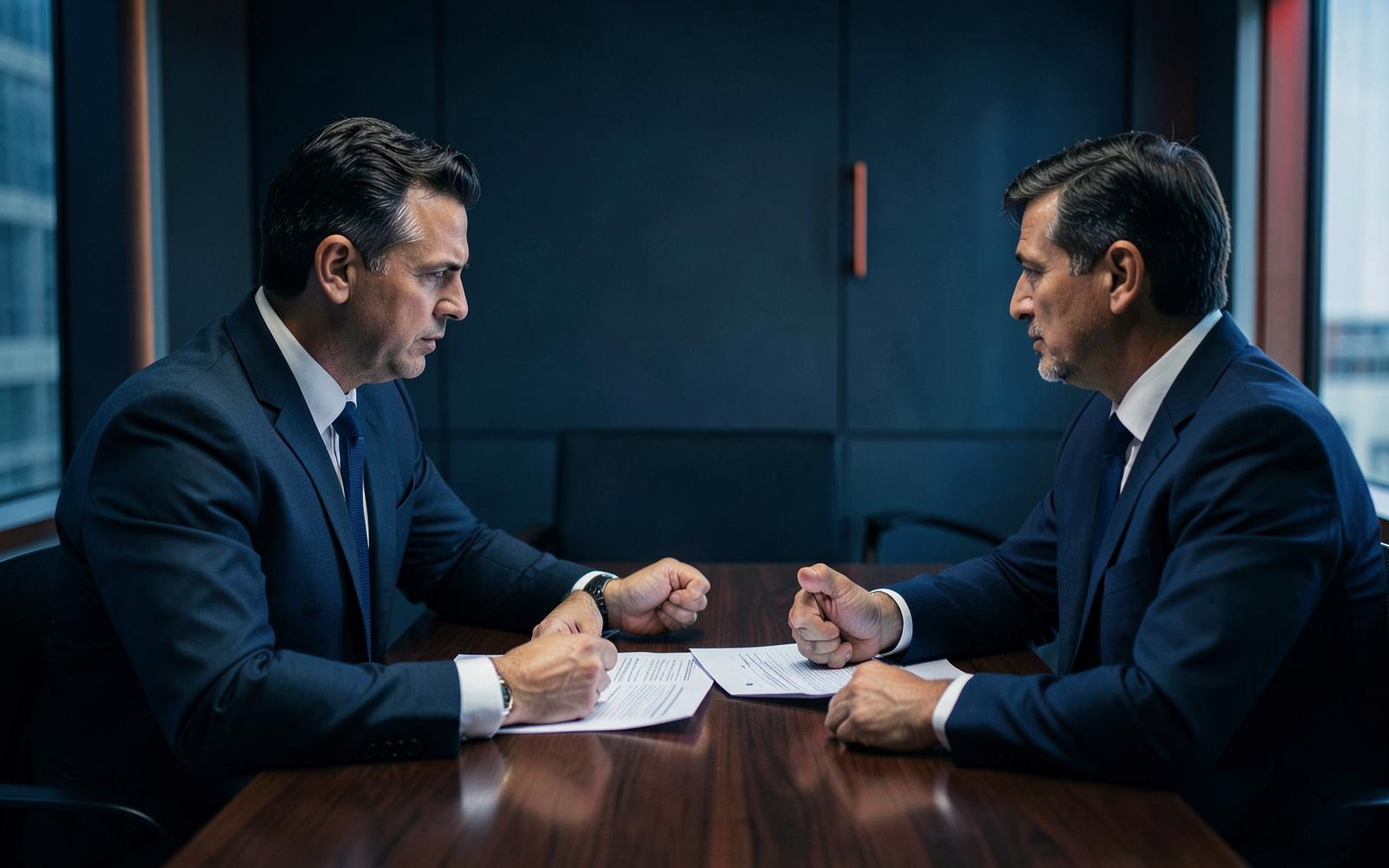
- advanced negotiation
- Sion
- research
- training sion