
Customer reception: turning an intention into a next step
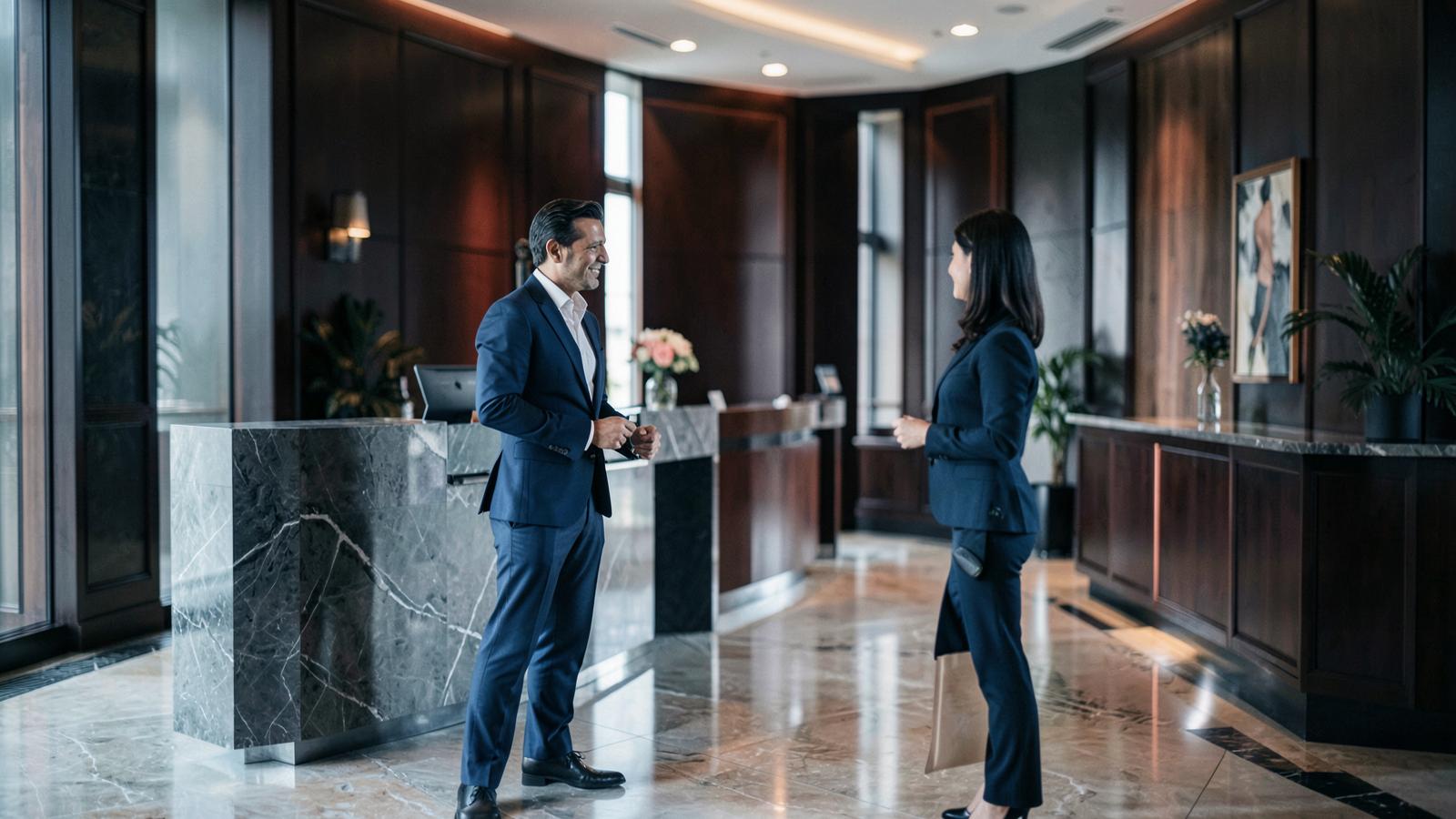
At reception, “I will send you the document” is often treated as a next step already secured. The more precise managerial question is whether helping customers choose when and in what situation to act makes progress more likely, without turning support into pressure.
What the literature establishes
Peter Gollwitzer and Veronika Brandstätter (1997, Journal of Personality and Social Psychology) distinguish an intention to achieve a goal from an intention to perform an action in a specified situation. Their work shows that specifying the circumstances of action can facilitate follow-through, particularly when getting started is difficult. However, their research does not examine customer reception: it supports a mechanism, not an already validated service method.
The mechanism: linking a situation to an action
Peter Gollwitzer (1999, American Psychologist) explains how a plan linking an identifiable situation to a response can help initiate action. “When I am at my computer, I will send the requested document” does not prepare action in the same way as “I will take care of it.” For reception teams, the hypothesis is that a cue chosen by the customer could be more useful than another exhortation to proceed.

The premature conclusion
One might conclude that every visitor should be asked to make a commitment. That would confuse helping someone carry out an intention with creating that intention. Customers who are uncertain about the value of a process must remain free to ask for clarification, postpone their decision or withdraw; planning does not resolve that disagreement. (our executive and employee training programmes)
What the evidence does not allow us to promise
These publications demonstrate neither higher satisfaction at reception nor fewer incomplete files in Lausanne organisations. Applying the findings also depends on practical conditions: having the document, having access to the required channel and being able to act without depending on someone else. An unfinished process should therefore not automatically be interpreted as a customer's lack of willingness.
A practical check in Lausanne
Within SHR's “Accueil client” programme, an exercise could focus on a simple, non-sensitive next step: confirming an appointment with a medtech company, completing registration at a higher education institution, sending logistical information to an international sports organisation or contacting a Lake Geneva region scale-up again. Over a period defined in advance, randomly compare, for comparable requests, the usual instruction with the same instruction followed by an optional invitation: “Would you like to choose a time or situation that would suit you for doing this?” Measure the proportion of actions completed within the stated deadline, using all eligible requests in each group as the denominator, including those where the invitation is declined. The chosen cue remains private; also recording necessary follow-ups and feedback indicating pressure helps avoid confusing progress on a case with reception quality. To go further: explore the Client Reception training in Lausanne in the canton of Vaud, or browse our executive and employee training programmes in Switzerland.
In pictures: Client Reception in Lausanne


- client reception
- Lausanne
- research
- training lausanne