
Customer reception: several staff present, but who makes the first move?
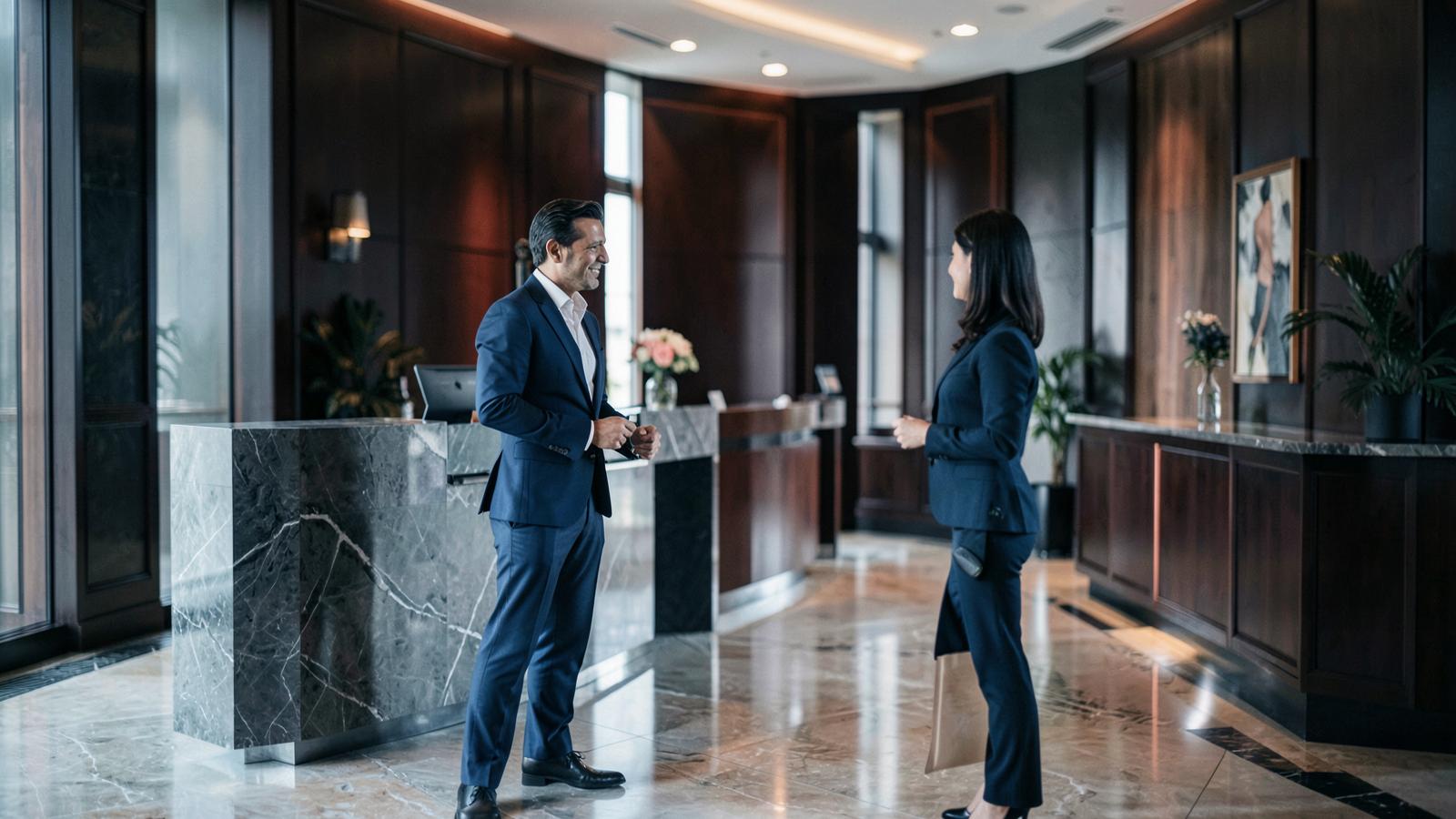
A visitor arrives at a desk staffed by several people, yet no one initiates contact. The management question is not simply about staffing levels: should someone be explicitly designated to make the first move?
What the literature establishes
John M. Darley and Bibb Latané (1968, Journal of Personality and Social Psychology) studied intervention in an emergency using an experimental setting in which participants believed that other people could also intervene. The supposed presence of other witnesses reduced and delayed intervention, a finding consistent with diffusion of responsibility. This study does not concern customer reception, but it challenges an organisational intuition: increasing the number of people who could act does not guarantee that someone will.
Intention alone does not trigger action
John M. Darley and C. Daniel Batson (1973, Journal of Personality and Social Psychology) observed whether theology students on their way to another task helped a person in distress. Experimentally manipulated time pressure influenced intervention, whereas preparing a talk about the Good Samaritan was not enough to encourage it. For reception work, this suggests a hypothesis to test rather than an established finding: reminders about the importance of service may be insufficient when the organisation leaves taking the initiative in competition with other tasks.

The premature conclusion
One might conclude that all initial contact should be reserved for a single person. The cited studies do not compare ways of organising a reception desk and cannot support that prescription. Designating an initiator may clarify the expected action; without an explicit backup when that person is unavailable, the same rule may also prevent others from acting. (our executive and employee training programmes)
What the evidence cannot resolve
An experimental emergency and an encounter with a person in distress reproduce neither the professional obligations nor the routines of a reception desk. Delayed initial contact may also result from a security check, a confidential conversation or genuine workload, without any diffusion of responsibility. Observing a delay is therefore insufficient to identify its cause, and a faster greeting does not demonstrate that subsequent guidance is correct.
A practical check in Bâle
As part of SHR's « Accueil client » programme, a Basel site working in pharmaceuticals, life sciences, Rhine logistics or international R&D could compare similar time slots, with and without an explicitly designated initiator and backup. Anonymous records would track the time between arrival at reception and the first staff-initiated contact, distinguishing individual visitors from groups. Visitor traffic, staff actually available and interruptions required by security or confidentiality would also need to be recorded. A reduction in the median delay without an increase in guidance requiring correction would provide local evidence of usefulness—not general validation of the arrangement. To go further: explore the Client Reception training in Basel, or browse our executive and employee training programmes in Switzerland.
In pictures: Client Reception in Basel

- client reception
- Basel
- research
- training basel