
Advanced negotiation: does hierarchical power remove the need to check?

In a negotiation, the presence of a senior executive can speed up a decision without improving the checks that precede it. The managerial question is specific: how can organisations preserve this ability to decide while ensuring that the executive's commitments are open to challenge?
What the literature establishes
Dacher Keltner, Deborah H. Gruenfeld and Cameron Anderson (2003, Psychological Review) propose a theoretical model in which power encourages approach tendencies, whereas its absence encourages inhibition. Their review associates power with greater attention to rewards and a reduced sense of social constraint. It does not demonstrate that a hierarchical superior negotiates better: it describes mechanisms that may influence their behaviour.
Taking action is not the same as making a good decision
Adam D. Galinsky, Deborah H. Gruenfeld and Joe C. Magee (2003, Journal of Personality and Social Psychology) show across several experiments that power can increase the propensity to act. This finding matters for negotiation because action may help break a deadlock, but may also commit the organisation before certain conditions have been clarified. The latter possibility is an application hypothesis, not a finding directly established by their experiments.

The premature conclusion
One might conclude that executives should be kept away from the negotiating table. These studies do not justify that rule: they do not directly compare the quality of agreements negotiated by executives and their staff. The useful distinction is instead between the authority to decide and the obligation to check, which hierarchical status should not blur. (our executive and employee training programmes)
The limits of the evidence and routine approvals
A theoretical model and experiments on power are not enough to predict how an executive committee will behave when faced with a real contract. Expertise, legal responsibilities and internal procedures may alter the expected effects. In practice, formal approval does not itself prove that an objection could be raised and examined before a commitment was made.
A practical check in Zurich
For a Zurich team in financial services, insurance, tech or the European headquarters of an international group, the “Advanced Negotiation” programme can provide a framework for a test: explicitly distinguish the person authorising a commitment from the person checking its conditions. For the next cases monitored, record a contestable assumption, a colleague's objection and the decision-maker's documented response before making the commitment. Then measure the proportion of cases with this complete record dated before the commitment, distinguishing executive-led cases from the others. This indicator checks for documented critical scrutiny, not the economic superiority of the agreement. To go further: explore the Advanced Negotiation training in Zurich in the canton of Zurich, or browse our executive and employee training programmes in Switzerland.
In pictures: Advanced Negotiation in Zurich

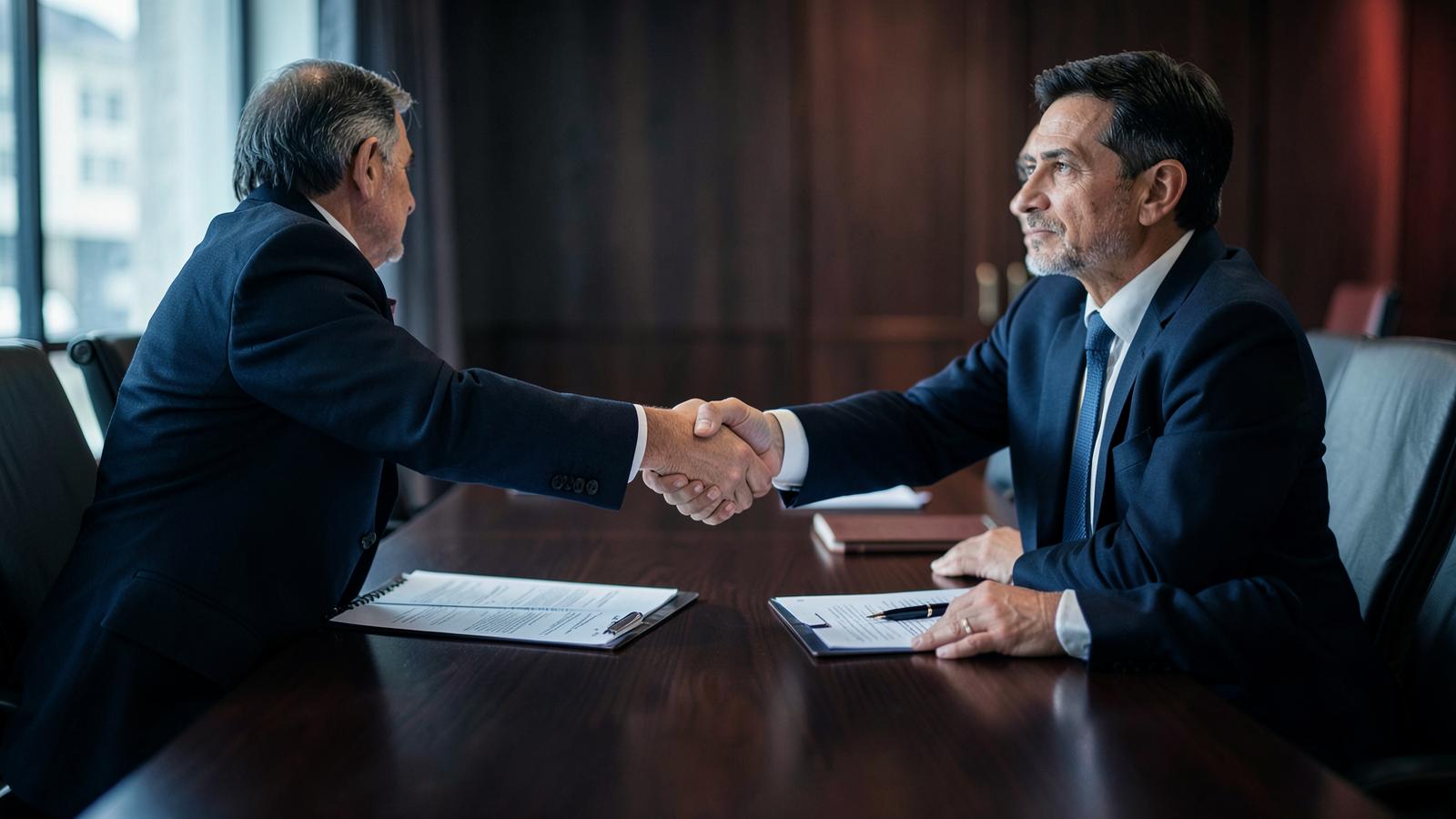

- advanced negotiation
- Zurich
- research
- training zurich