
Advanced negotiation: can behaviour reveal a bluff?
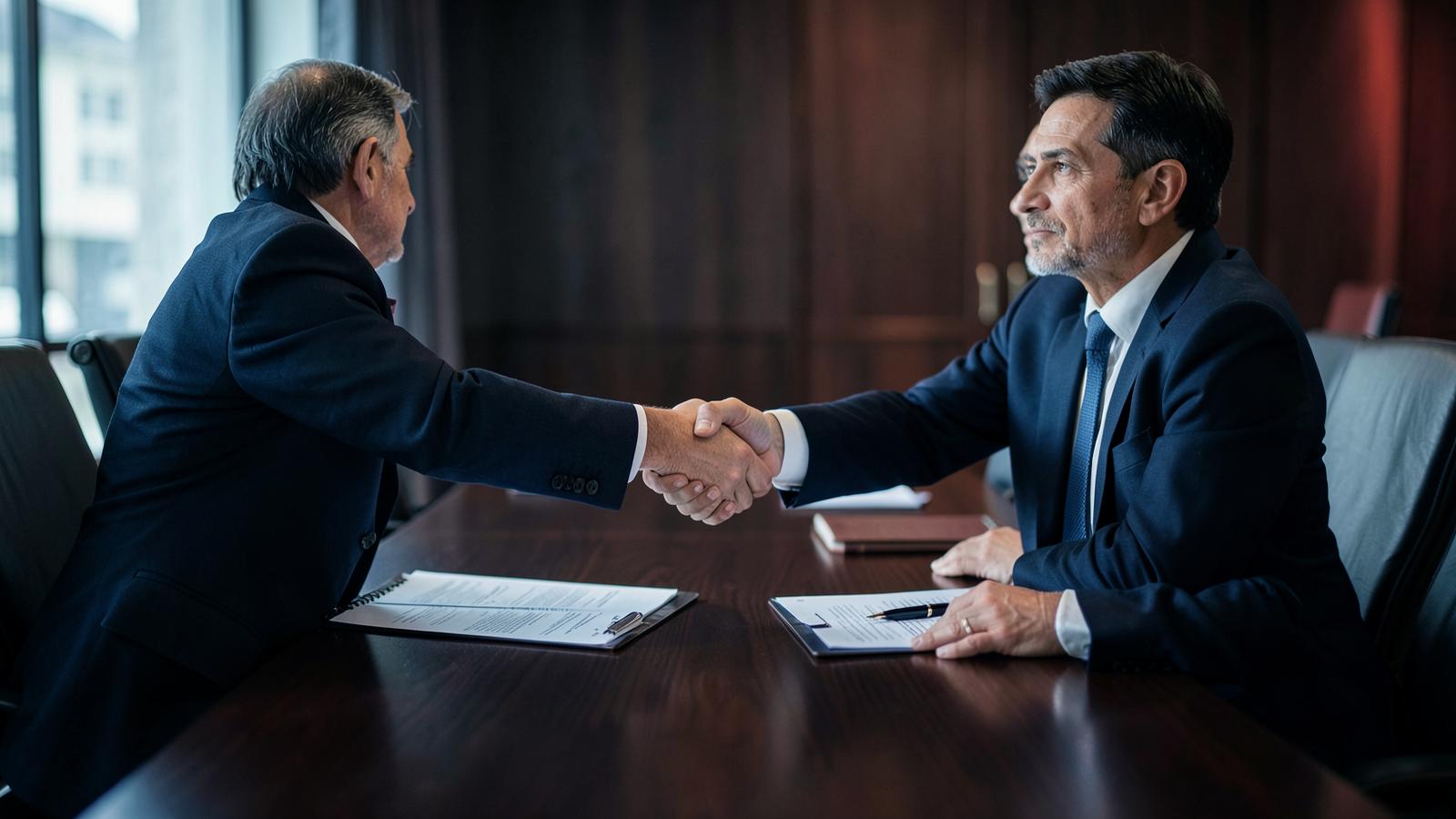
When a supplier describes a lead time as non-negotiable, their confidence can carry as much weight as their reasoning. The managerial question is specific: should concessions respond to the other party's behaviour, or to evidence that allows their constraint to be checked?
What the literature establishes
Charles F. Bond Jr. and Bella M. DePaulo (2006, Personality and Social Psychology Review) synthesised research on the ability to distinguish lies from truthful statements. Under the conditions studied, human judgements perform modestly above chance, without providing a reliable method for detecting individual lies. This synthesis therefore does not validate the idea that negotiators can recognise a bluff from the other party's demeanour alone.
Why behavioural cues disappoint
Maria Hartwig and Charles F. Bond Jr. (2011, Psychological Bulletin) examined both the cues people use to judge sincerity and those cues' actual relationship with deception. Their meta-analysis shows that the difficulty is not simply a matter of choosing the wrong cues: the available behavioural cues themselves have limited diagnostic value. Teaching a list of suspicious gestures therefore does not resolve the underlying problem.

The premature conclusion
One might conclude that all behaviour should be ignored and every claim believed until disproved. These studies justify neither such credulity nor systematic suspicion: a sign of discomfort may warrant clarification without establishing deception. In negotiation, the more important distinction is between a verifiable factual claim, an uncertain forecast and a position the other party chooses to defend. (our executive and employee training programmes)
What the evidence cannot promise
This research concerns judgements of truthfulness, rather than directly examining bluff detection in repeated industrial negotiations. It cannot quantify the contribution of a longstanding relationship with a supplier, technical expertise or contradictory documents. Conversely, professional experience alone does not demonstrate an ability to read deception in someone's face.
A practical check in Neuchâtel
As part of SHR's “Advanced Negotiation” programme, one possible application in Neuchâtel would be to keep a record of decisive constraints invoked when purchasing microtechnology, watchmaking or precision microelectronics components. For each factual claim — available capacity, qualification lead time or tolerance requirement — the team would record the proposed concession and the document or test that could substantiate it, while respecting confidentiality. Over a period defined before the trial, it would measure the proportion of concessions linked to these claims that were preceded by a documented check. This indicator does not count detected lies; it makes the shift from reading people to examining constraints verifiable. To go further: explore the Advanced Negotiation training in Neuchâtel in the canton of Neuchâtel, or browse our executive and employee training programmes in Switzerland.
In pictures: Advanced Negotiation in Neuchâtel


- advanced negotiation
- Neuchâtel
- research
- training neuchâtel