
Advanced negotiation: is telling the truth enough to avoid misleading?
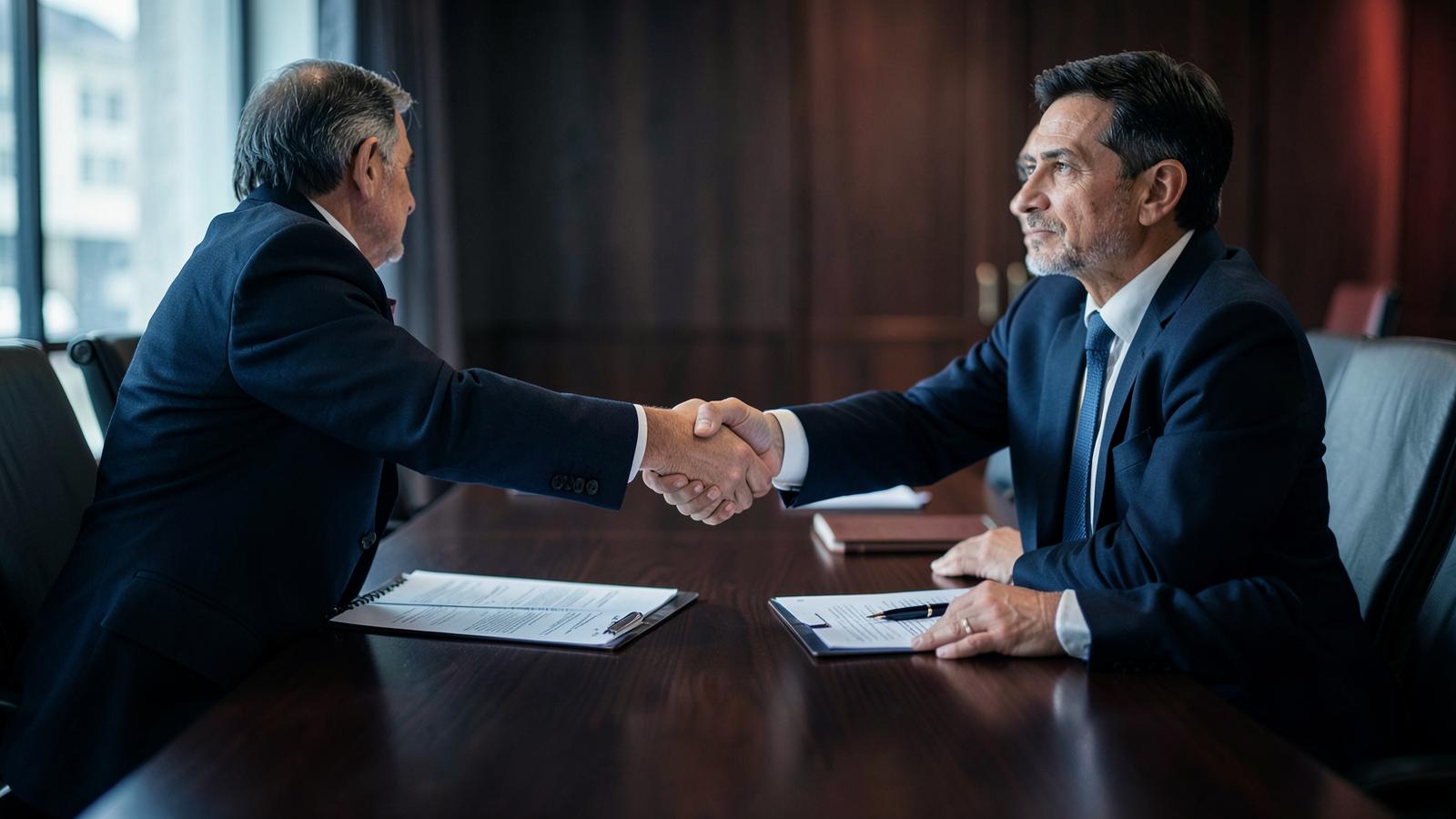
A manager may be able to defend every sentence in an offer without being able to defend the overall impression it creates. The managerial question is specific: how can we check that a favourable presentation remains fair when it selectively uses true facts?
What the literature establishes
Todd Rogers, Richard Zeckhauser, Francesca Gino, Michael I. Norton and Maurice E. Schweitzer (2017, Journal of Personality and Social Psychology) study “paltering”: actively using truthful statements to mislead others. Their experiments reveal a gap: people using this tactic consider it more acceptable than its recipients do. Literal truth therefore offers no protection against the feeling of having been deceived.
The mechanism: judging the act rather than its effect
Mark Spranca, Elisa Minsk and Jonathan Baron (1991, Journal of Experimental Social Psychology) show, in moral judgement scenarios, that omissions can be judged less harshly than actions with comparable consequences. Their work does not directly examine negotiation and does not equate omission with misleading statements. It nevertheless illuminates a related difficulty: we may judge our conduct by what we explicitly did rather than by what we led someone to believe.

The premature conclusion
One might conclude that fair negotiation requires full disclosure. These studies do not establish that: protecting confidential information does not necessarily amount to creating a false impression. The useful distinction is between explicitly declining to disclose information and presenting a partial truth as though it fully answered the question. (our executive and employee training programmes)
What the evidence cannot settle
The available experiments provide neither a rate of deception in Valais businesses nor a legal rule applicable to their contracts. Nor do they establish that every instance of selective disclosure will jeopardise an agreement. Checking only whether sentences are accurate nevertheless remains an incomplete safeguard: it overlooks the conclusion a recipient could reasonably draw.
A practical check in Sion
An exercise to propose in Sion within SHR’s “Advanced Negotiation” programme is to have a colleague unfamiliar with the case review an anonymised offer before it is sent. Depending on the sector, the offer could concern the availability of a hydropower installation, a healthcare service’s capacity, a wine estate’s deliverable volume or the services included in an Alpine holiday. The reader writes down what they believe is guaranteed; the person responsible checks each expectation against the documented commitments. The indicator is the proportion of inferred but unsupported expectations, before and after revising the offer: a test of clarity, not proof of fair dealing. To go further: explore the Advanced Negotiation training in Sion in the canton of Valais, or browse our executive and employee training programmes in Switzerland.
In pictures: Advanced Negotiation in Sion
- advanced negotiation
- Sion
- research
- training sion