
Conflict management: should we start with the weaknesses in our own case?

When a conflict concerns responsibility or resource allocation, each side may regard its own position as objectively justified. The managerial question is specific: can asking everyone to identify weaknesses in their own case before the discussion help negotiations?
What the literature establishes
Ziva Kunda (1990, Psychological Bulletin) reviews motivated reasoning: the conclusion we want to reach can influence how we select and assess arguments. This process does not necessarily involve an intention to deceive; it remains constrained by our ability to construct a plausible justification. In a conflict, sincerely holding a belief therefore does not guarantee that the reasoning supporting it is impartial.
When the same facts justify two positions
Linda Babcock and George Loewenstein (1997, Journal of Economic Perspectives) examine how self-serving biases contribute to bargaining impasses. The experiments discussed show that parties with the same information can make different judgments about fairness, favouring their assigned role. The authors also report that examining weaknesses in one's own case can reduce this bias in an experimental setting.

The premature conclusion
One might conclude that conflict persists only because people lack perspective. That would confuse a cognitive mechanism with a complete explanation: genuinely incompatible interests, regulatory obligations or insufficient resources can sustain disagreement. Examining one's own case means neither giving up one's rights nor assuming that responsibility must be shared. (our executive and employee training programmes)
What the evidence cannot promise
The review of motivated reasoning is not an evaluation of a workplace conflict management protocol. The experimental negotiations discussed do not fully reproduce an organisation's ongoing relationships, hierarchical asymmetries or language constraints. Publicly asking someone to admit weaknesses may also feel accusatory: individual preparation offers a more cautious starting point, without guaranteeing agreement.
A practical check in Fribourg
As part of SHR's « Gestion du conflit » programme, an exercise to test in Fribourg would ask each participant to identify privately a weakness in their own case and a fact that could change their position before discussing resources or responsibilities. In agri-food businesses, a bilingual industrial team or a unit within the university community, participants could prepare in French or German, then have the points they share restated to check understanding. Across the next discussions selected for the trial, record the proportion in which each party states an observable criterion for revising their position, then check at follow-up whether new facts actually prompted reconsideration. This indicator measures whether positions are being tested, not whether conflict has disappeared; it distinguishes genuinely open preparation from an exercise in justification. To go further: explore the Conflict Management training in Fribourg in the canton of Fribourg, or browse our executive and employee training programmes in Switzerland.
In pictures: Conflict Management in Fribourg


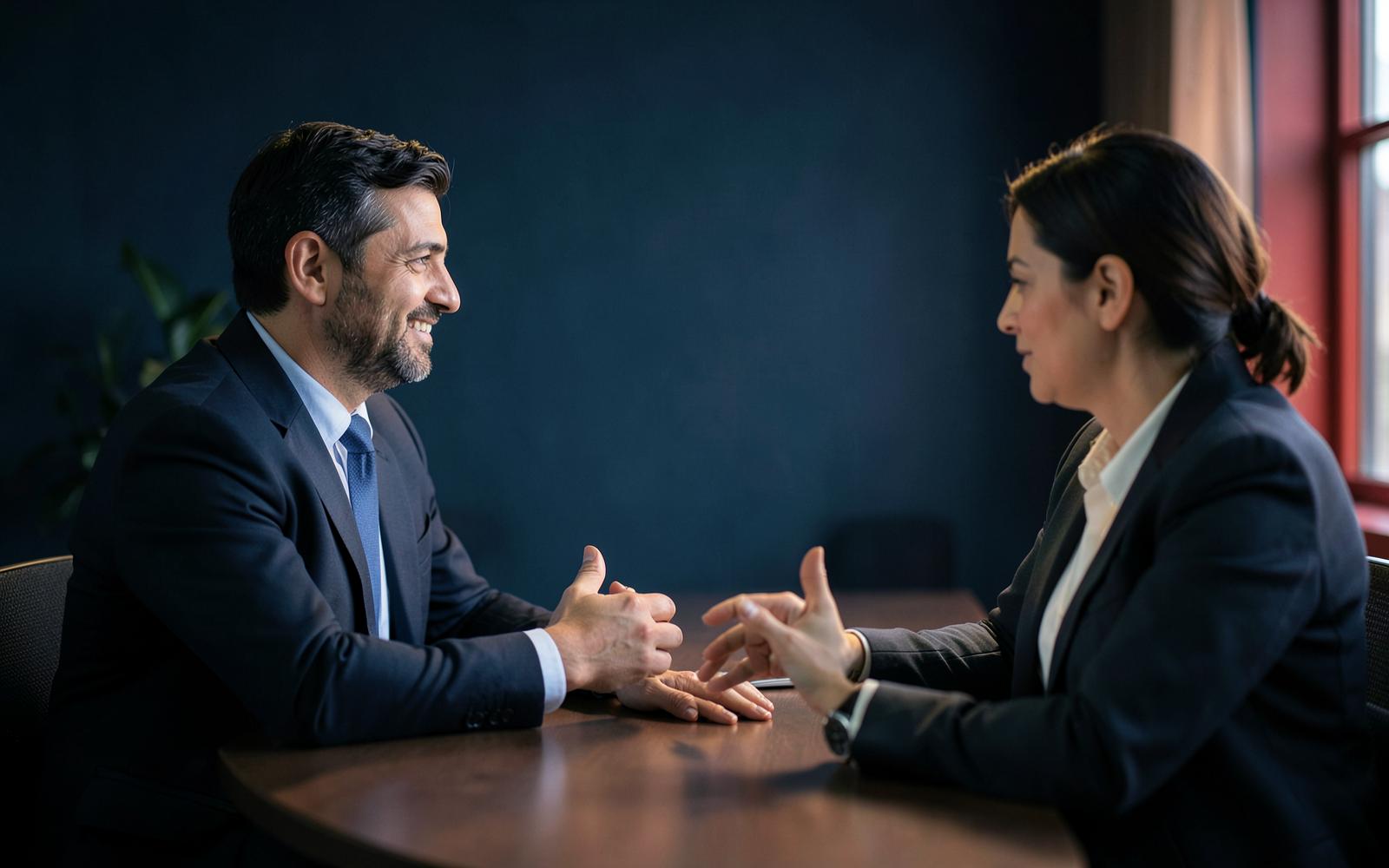
- conflict management
- Fribourg
- research
- training fribourg