
Customer reception: thanking people without reducing the relationship to a formula

At the reception desk, “thank you” often belongs to the script rather than to an explicit decision to recognise what someone has contributed. The management question is specific: should teams be trained to thank people for an identifiable contribution, rather than simply use more courtesy phrases?
What the literature establishes
Adam M. Grant and Francesca Gino (2010, Journal of Personality and Social Psychology) show, through experiments and a field study, that an expression of gratitude can encourage subsequent helping behaviour. The mechanism they identify involves, in particular, feeling valued by others, rather than simply feeling competent. These findings concern people who have provided help, not a general measure of customer satisfaction.
Acknowledging a contribution can also build a relationship
Sara B. Algoe, Jonathan Haidt and Shelly L. Gable (2008, Emotion) studied gratitude in relationships between participants in a gift-giving programme within a student sorority. Their observations support the idea that gratitude contributes to building relationships, beyond repaying a favour. For customer reception, this suggests a hypothesis: thanking someone for flagging a useful issue might carry a different relational meaning from an automatic “thank you”.

The premature conclusion
It would be tempting to conclude that thanking people more often is enough to secure greater cooperation. Yet these studies establish neither that a repeated phrase produces this effect nor that it improves loyalty in a commercial relationship. Thanking someone for pointing out an inconsistency acknowledges a contribution; thanking them in advance for accepting a constraint may instead treat their agreement as a given. (our executive and employee training programmes)
What the evidence cannot settle
The settings studied do not reproduce the constraints of a multilingual, regulated or heavily used reception service. They cannot identify the optimal wording or establish that a specific thank-you consistently outperforms a conventional phrase. Counting instances of “thank you” would therefore indicate script compliance, not demonstrate relationship quality.
A practical check in Lausanne
In SHR’s “Accueil client” programme, an exercise can draw on Lausanne situations: access information corrected at a medtech company, a missing document flagged at a higher education institution, a badge inconsistency identified in international sport, or documentation clarified at a Lake Geneva region scale-up. Over two weeks, the team can log exchanges involving an identifiable contribution without recording personal data, then calculate the proportion in which the thank-you actually names that contribution. A colleague checks the coding on a sample using anonymised wording, distinguishing acknowledgement of a contribution from presumed agreement. This record checks an observable practice; it does not, by itself, demonstrate improved satisfaction. To go further: explore the Client Reception training in Lausanne in the canton of Vaud, or browse our executive and employee training programmes in Switzerland.
In pictures: Client Reception in Lausanne
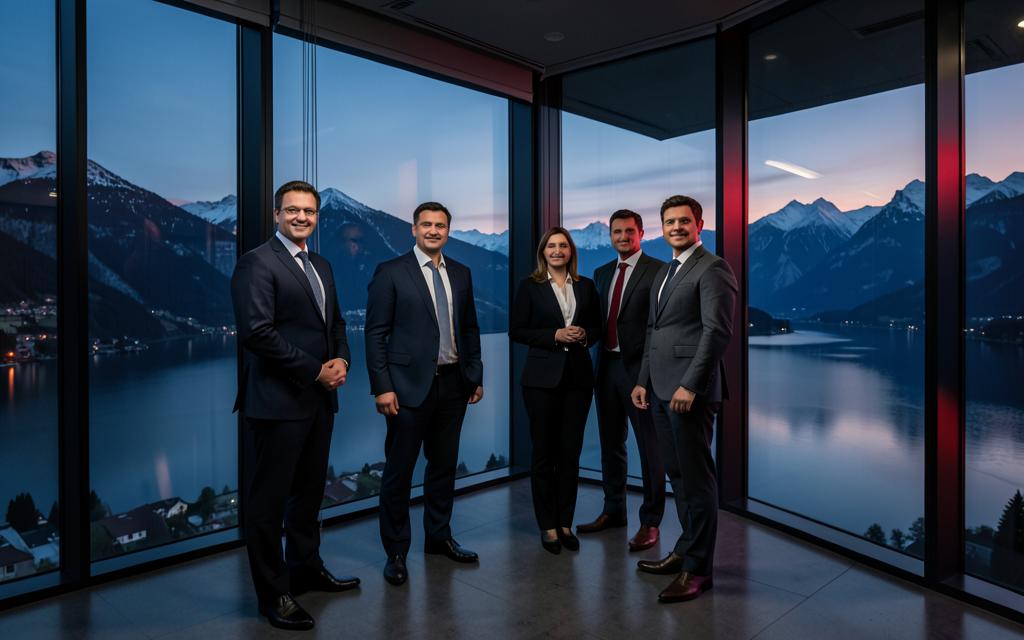


- client reception
- Lausanne
- research
- training lausanne