
Customer reception: understanding is not the same as remembering
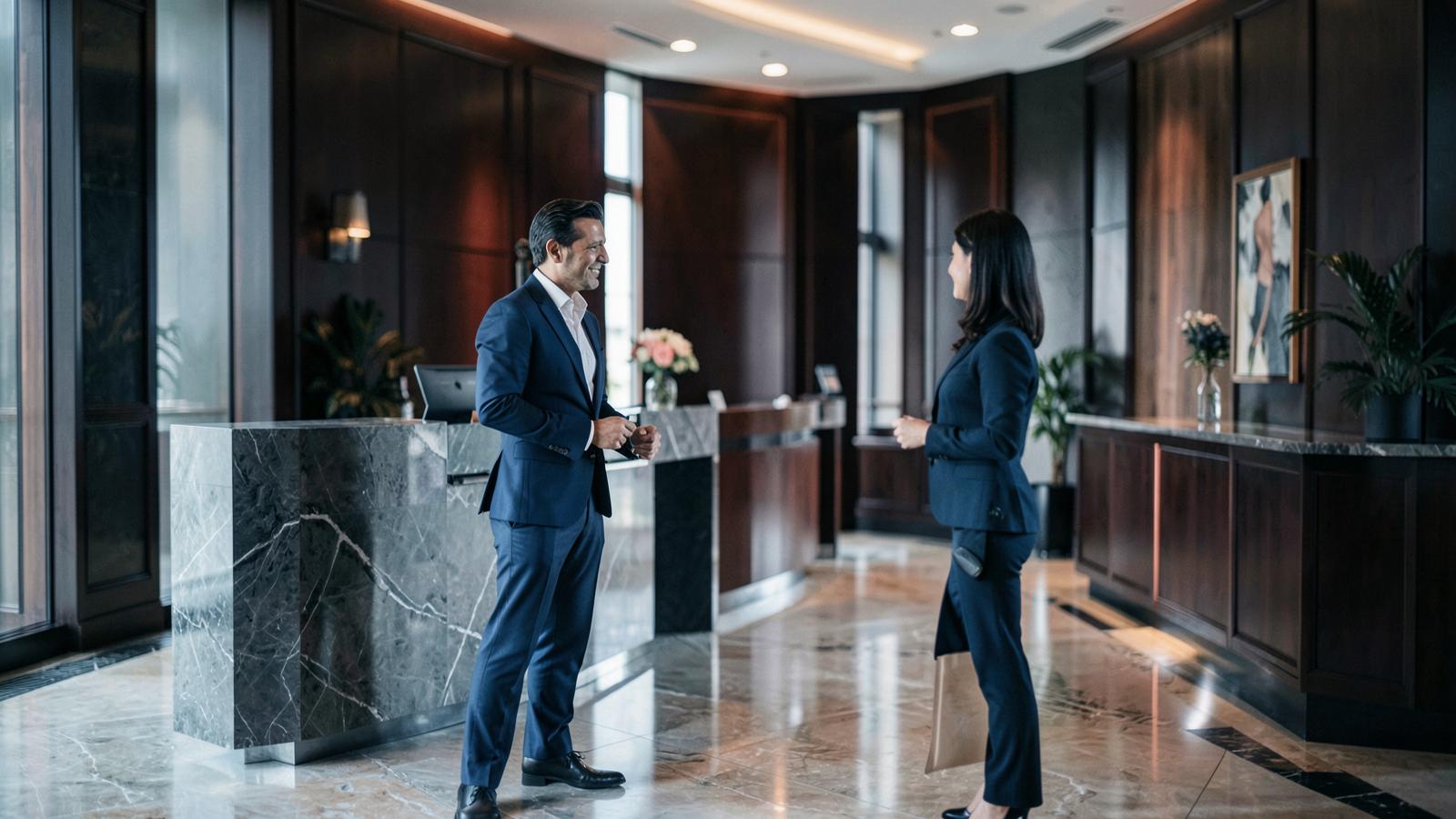
At reception, a nod often brings an explanation of a route or procedure to a close. The more precise managerial question is: how can we help visitors recall their next useful action once they have left the desk?
What the literature establishes
Henry L. Roediger III and Jeffrey D. Karpicke (2006, Psychological Science) compared repeated study of texts with conditions involving recall from memory. In their experiments, repeated study favoured performance on an immediate test, whereas recall favoured retention on delayed tests. Information that remains available immediately after presentation is therefore not necessarily information that will remain accessible later.
Retrieving information rather than seeing it again
Jeffrey D. Karpicke and Henry L. Roediger III (2008, Science) studied vocabulary-pair learning by varying whether studying and testing continued after an initial correct response. Continuing to retrieve answers from memory improved delayed retention, whereas continued study alone did not in this protocol. The relevant mechanism is not simply additional exposure: it is the practice of retrieving information without having it in view.
The premature conclusion
One might conclude that every visitor should repeat every instruction. These studies justify neither that generalisation nor turning reception into an examination. A brief invitation to state the next step is a practical hypothesis to test, not a method already proven effective at reception. (our executive and employee training programmes)
What the evidence cannot guarantee
These experiments concern controlled learning tasks, not visitors trying to reach a laboratory or a delivery bay. They do not establish how a single restatement affects navigation errors in a multilingual interaction or under time pressure. Oral recall therefore replaces neither accessible supporting information nor applicable escort and safety procedures.
A practical check in Bâle
Within SHR’s « Accueil client » programme, an exercise applicable to pharmaceutical sites, life sciences, Rhine logistics and international R&D in Basel is to add an optional invitation after the usual explanation: “To check my explanation, what will your next step be?” For a pilot, randomly allocate time slots to usual reception or this variant, keeping the same supporting materials, available languages and safety rules. In each condition, measure the proportion of visitors reaching the intended point without redirection by dividing arrivals without redirection by all observed arrivals, and record the duration of the interaction separately. This comparison would allow a local benefit to be assessed without assuming that the laboratory effect transfers to practice. To go further: explore the Client Reception training in Basel, or browse our executive and employee training programmes in Switzerland.
In pictures: Client Reception in Basel
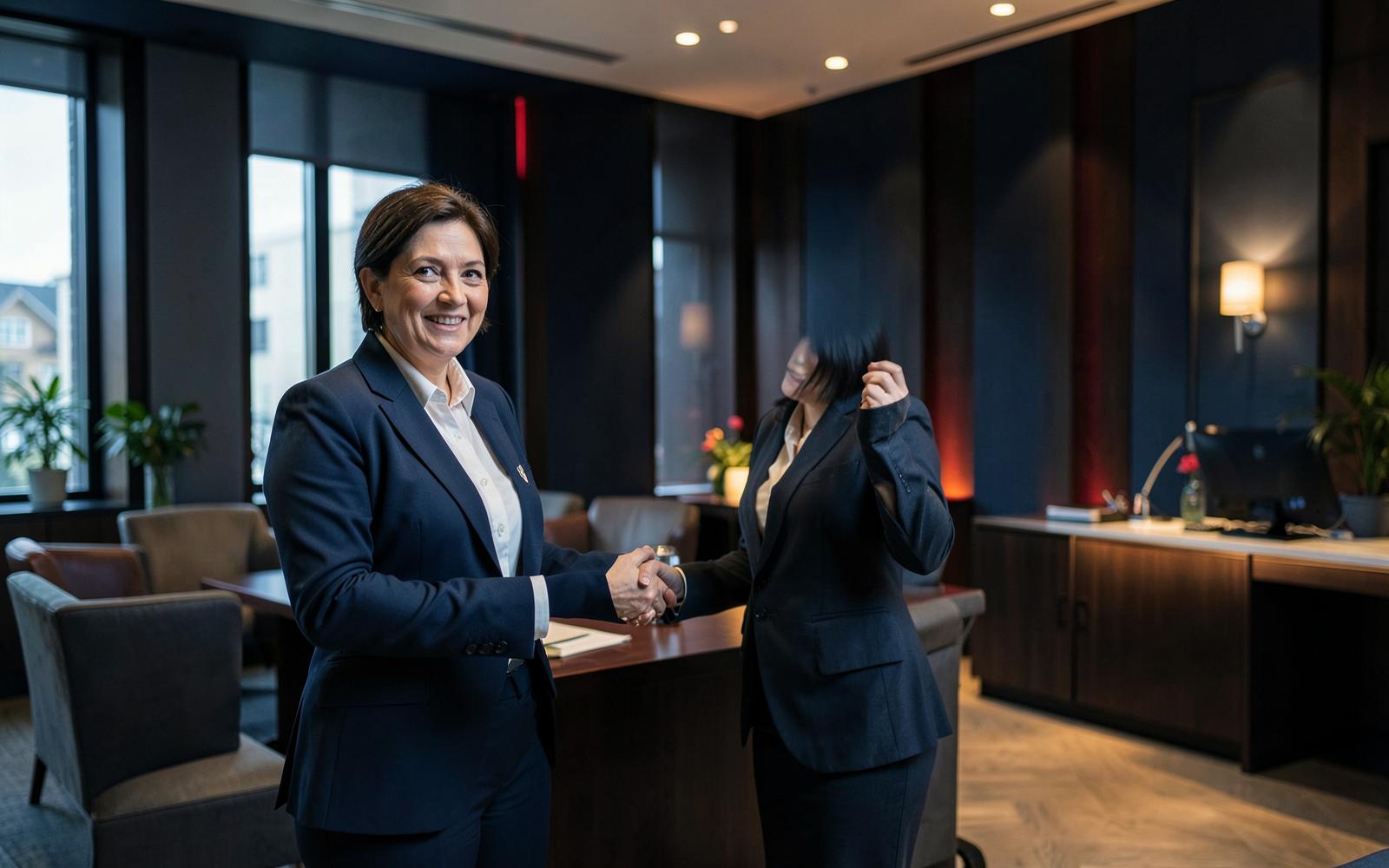
- client reception
- Basel
- research
- training basel