
Customer reception: helping without hovering

At reception, assistance sometimes means remaining beside a customer throughout a procedure. The management question is specific: should staff stay alongside someone performing an unfamiliar task, or offer to step away while remaining available?
What the literature establishes
Robert Zajonc (1965, Science) offers a theoretical synthesis: the presence of others facilitates dominant responses, meaning those that arise most readily. These responses may be appropriate for a well-practised task but unsuitable for a new or complex one. A staff member's presence is therefore not, in itself, a guarantee of better performance.
A presence whose effects depend on the task
Charles Bond and Linda Titus (1983, Psychological Bulletin) examine this question in a meta-analysis, distinguishing, among other things, speed from accuracy. Their synthesis identifies different effects depending on task complexity, including reduced accuracy on complex tasks in the presence of others. It cautions against treating faster completion as equivalent to better performance.

The premature conclusion
One might conclude that customers should be left alone whenever a procedure becomes difficult. These studies do not support that prescription: a staff member may also provide an essential explanation, and the presence investigated is not necessarily professional assistance. The issue is instead to distinguish requested help from sustained observation throughout the task. (our executive and employee training programmes)
What these findings cannot decide
This research does not specifically address reception in banks, insurance companies or international headquarters. It cannot establish the ideal distance for a staff member, nor justify assuming that a silent customer wants to be left alone. Applying it also requires distinguishing steps where staff presence is mandatory from those where it is simply a service habit.
A practical check in Zurich
Within SHR's “Accueil client” programme, a practical exercise in Zurich could focus on a non-sensitive procedure, such as a visitor form in financial services, insurance, tech or the European headquarters of an international group. For steps that do not require staff supervision, use alternating time slots to compare the usual staff presence with an explicit offer to step away, while keeping help immediately available. Measure the proportion of forms requiring correction before approval — corrected forms divided by forms received — while keeping instructions identical and distinguishing languages and first-time from returning visitors. This local test would not prove the psychological mechanism, but it would check whether this reception approach actually improves task performance. To go further: explore the Client Reception training in Zurich, or browse our executive and employee training programmes in Switzerland.
In pictures: Client Reception in Zurich
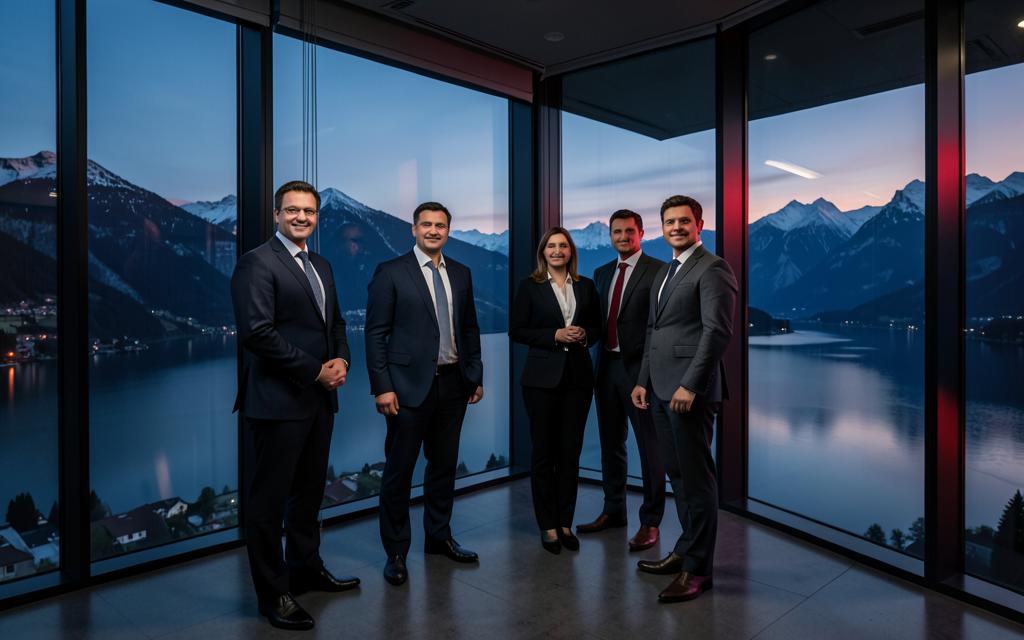


- client reception
- Zurich
- research
- training zurich