Does a leader's mood influence how the team works?
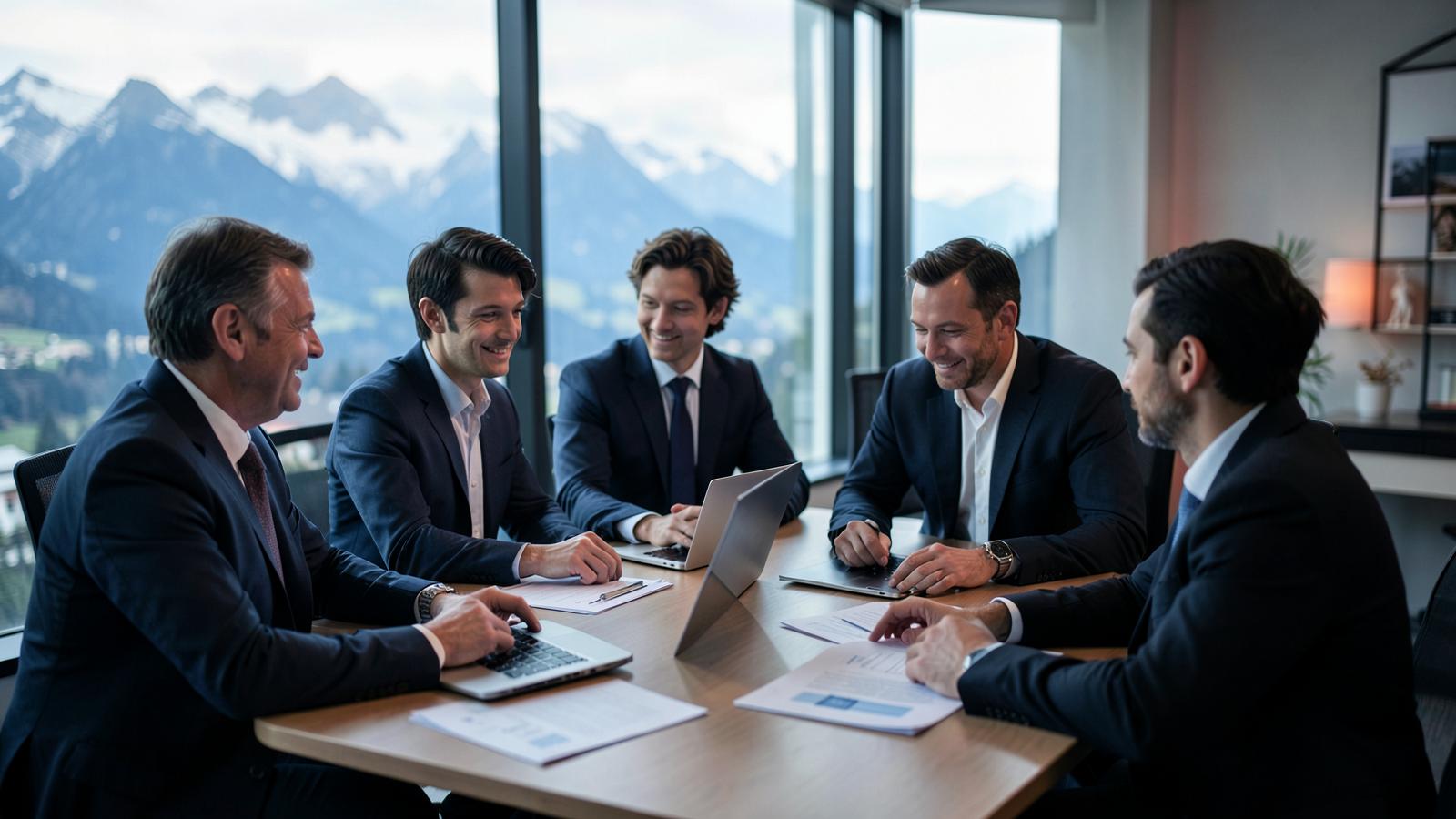
A leader may prepare instructions carefully while overlooking the mood conveyed when delivering them. The management question is specific: does this affective state influence team coordination independently of what the instructions say?
What the literature establishes
Sigal G. Barsade (2002, Administrative Science Quarterly) experimentally studied emotional contagion in groups completing a managerial decision-making simulation. Introducing a member who expressed a positive affective state increased cooperation, reduced conflict and improved perceived task performance. That last measure must be distinguished from an objectively established productivity gain.
The leader's mood as a collective signal
Thomas Sy, Stéphane Côté and Richard Saavedra (2005, Journal of Applied Psychology) experimentally manipulated leaders' moods before a group task. Members working with a leader in a positive mood displayed a more positive mood and better coordination than those working with a leader in a negative mood. However, groups in the latter condition expended more effort: coordination and effort therefore do not necessarily respond in the same way.

The premature conclusion
Concluding that a good leader must always appear cheerful would go too far. These findings demonstrate neither that optimism suits every situation nor that expressing a negative mood is a desirable way to elicit greater effort. Instead, they suggest distinguishing between the affective signal conveyed, the effort invested and the quality of coordination. (our executive and employee training programmes)
What the experiments leave unresolved
These experiments allow causal effects to be studied in bounded situations, but they do not establish whether those effects persist in ongoing teams. Relationship history, safety requirements and workload may alter the significance of an emotional signal. Training should therefore neither promise performance gains through mood alone nor turn emotional regulation into an obligation to smile.
A practical check in Sion
As part of SHR's « Performance d'équipe » programme, a team based in Sion could track its work handovers for two weeks: an operational handover in hydropower, a healthcare handover, instructions passed between viticulture workers or coordination of an alpine tourism service. After each selected handover, anonymously record the perceived tone — negative, neutral or positive — and then use the tracking log to calculate the proportion of tasks requiring clarification before execution. Comparing this rate by perceived tone, while also recording workload and urgency, would provide a verifiable local observation, but neither causal proof nor a ranking of leaders. To go further: explore the Team Performance training in Sion in the canton of Valais, or browse our executive and employee training programmes in Switzerland.
In pictures: Team Performance in Sion

- team performance
- Sion
- research
- training sion