
Customer reception: is a polite yes a freely made choice?
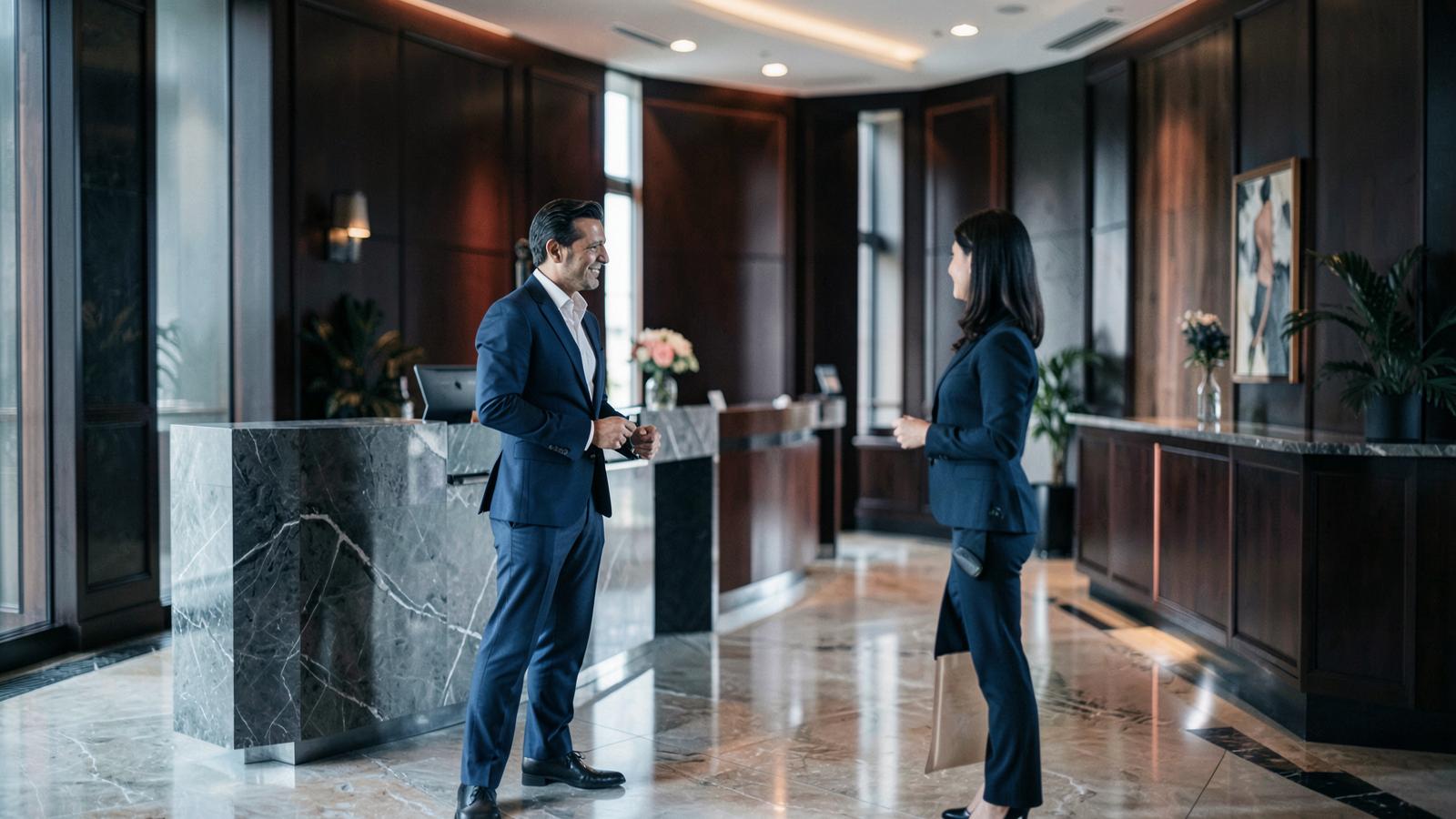
At reception, asking for feedback or optional participation can seem like an ordinary exchange. Yet the management question is precise: how can staff offer that opportunity without turning a service relationship into a social obligation?
What the literature establishes
Francis J. Flynn and Vanessa K. B. Lake (2008, Journal of Personality and Social Psychology) show across several studies that people making direct requests for help underestimate the likelihood of agreement. This error stems partly from insufficient attention to the social cost of refusal for the person being asked. Requesters see the effort involved in helping, but are less aware of the embarrassment that saying no may cause.
The social cost requesters overlook
Vanessa K. Bohns (2016, Current Directions in Psychological Science) reviews research on this underestimation of the influence exerted by a direct request. The mechanism requires neither a threat nor manipulative intent: an ordinary request can already make refusal uncomfortable. In reception settings, this suggests examining how an optional activity is offered, rather than simply how long it takes.

The hasty conclusion
It would be tempting to conclude that agreement given face to face is always coerced. These findings support neither that generalisation nor a diagnosis of any individual visitor’s motivations. They warrant a narrower precaution: do not automatically equate a high acceptance rate with strong interest in what is being offered. (our executive and employee training programmes)
What the evidence cannot settle
These studies concern requests for help and other forms of solicitation, not a specific assessment of reception services in Lausanne. They do not demonstrate that wording which mentions optional participation is enough to eliminate all pressure. One common practice therefore deserves scrutiny: counting agreements without checking whether refusal feels genuinely possible and has no consequences for the service provided.
A practical check in Lausanne
Within SHR — Swiss Human Resources’ “Accueil client” programme, an exercise could examine an optional invitation to give feedback after visiting a medtech company, a higher education institution, an international sports organisation or a Lake Geneva region scale-up. In Lausanne, alternate reception time slots using the usual wording with slots using wording that explicitly states that declining will not affect the service, alongside an opportunity to respond later away from staff. Measure acceptances as a proportion of invitations and, through an anonymous question offered in both conditions, the proportion of respondents who say they could decline without embarrassment, also reporting the response rate. Fewer acceptances alongside greater reported freedom would not necessarily represent failure; this local test would provide an indication, not definitive proof. To go further: explore the Client Reception training in Lausanne in the canton of Vaud, or browse our executive and employee training programmes in Switzerland.
In pictures: Client Reception in Lausanne
- client reception
- Lausanne
- research
- training lausanne