
Customer reception: does asking for advice undermine credibility?

In financial services, insurance, tech and the European headquarters of international groups in Zurich, an apparently simple enquiry may require specialist confirmation. The management question is specific: how can reception staff seek advice without treating that step as an admission of incompetence?
What the literature establishes
Alison Wood Brooks, Francesca Gino and Maurice E. Schweitzer (2015, Management Science) show, across a series of experimental studies, that seeking advice can increase perceived competence in the eyes of the person consulted. This effect depends, among other things, on task difficulty and the other person's expertise. The fear that asking for advice necessarily damages credibility is therefore not justified as a general rule.
A barrier on the requester's side
Francis J. Flynn and Vanessa K. B. Lake (2008, Journal of Personality and Social Psychology) show that people underestimate the likelihood that others will agree to a direct request for help. They give insufficient weight to the social cost of refusing for the person being asked. This mechanism may help explain a reluctance to consult a colleague, without establishing that the colleague actually has the necessary time or expertise.

The premature conclusion
It would be tempting to conclude that seeking advice always strengthens customer trust. Yet the competence effect studied concerns the judgement of the person giving advice, not necessarily that of a customer observing the exchange. Likewise, securing a colleague's help establishes neither their actual availability nor the quality of their answer. (our executive and employee training programmes)
What the evidence cannot prescribe
These studies establish neither the optimal frequency of consultation at reception nor its effect on the reliability of answers in Zurich businesses. A general instruction to “ask more often” risks multiplying interruptions without specifying which situations warrant verification. Management therefore needs to define the limits of autonomy and make a competent contact accessible, rather than treating every hesitation as a lack of confidence.
A practical check in Zurich
Within SHR — Swiss Human Resources' “Accueil client” programme, one practical exercise to test in Zurich is to agree with the team which enquiries require confirmation before a binding answer is given. For two weeks, record without personal data the proportion of those enquiries actually checked before an answer, together with the delay caused by consultation. Testing a straightforward phrase — “I'll check this point with the appropriate specialist before confirming the answer” — makes it possible to practise the behaviour without promising an unproven increase in trust. The verifiable criterion remains confirmation obtained in time, not the raw number of requests for help. To go further: explore the Client Reception training in Zurich, or browse our executive and employee training programmes in Switzerland.
In pictures: Client Reception in Zurich
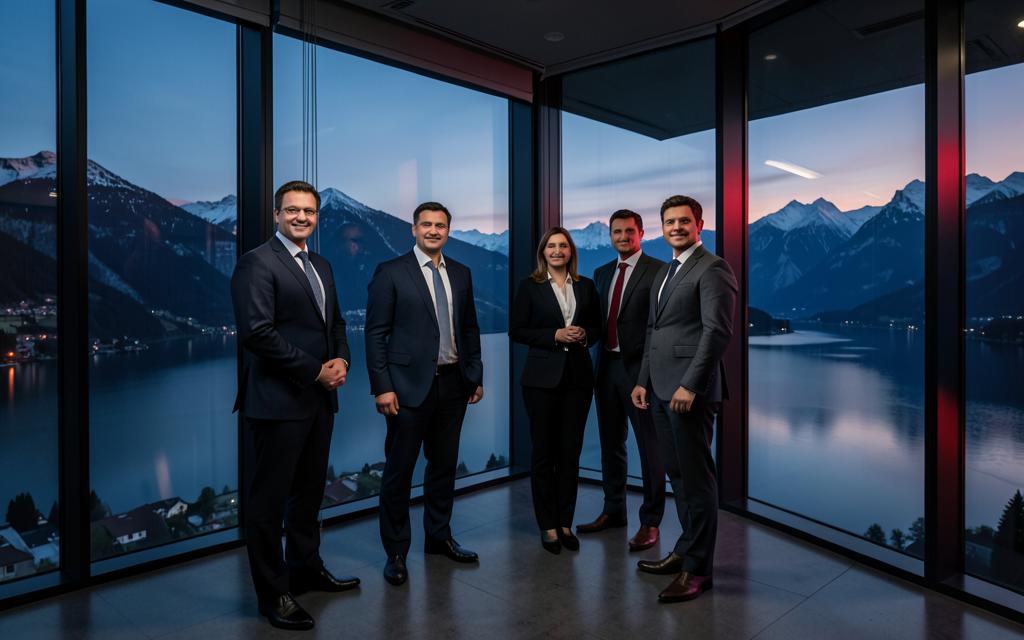


- client reception
- Zurich
- research
- training zurich