
Customer reception: do regulars enjoy an invisible advantage?
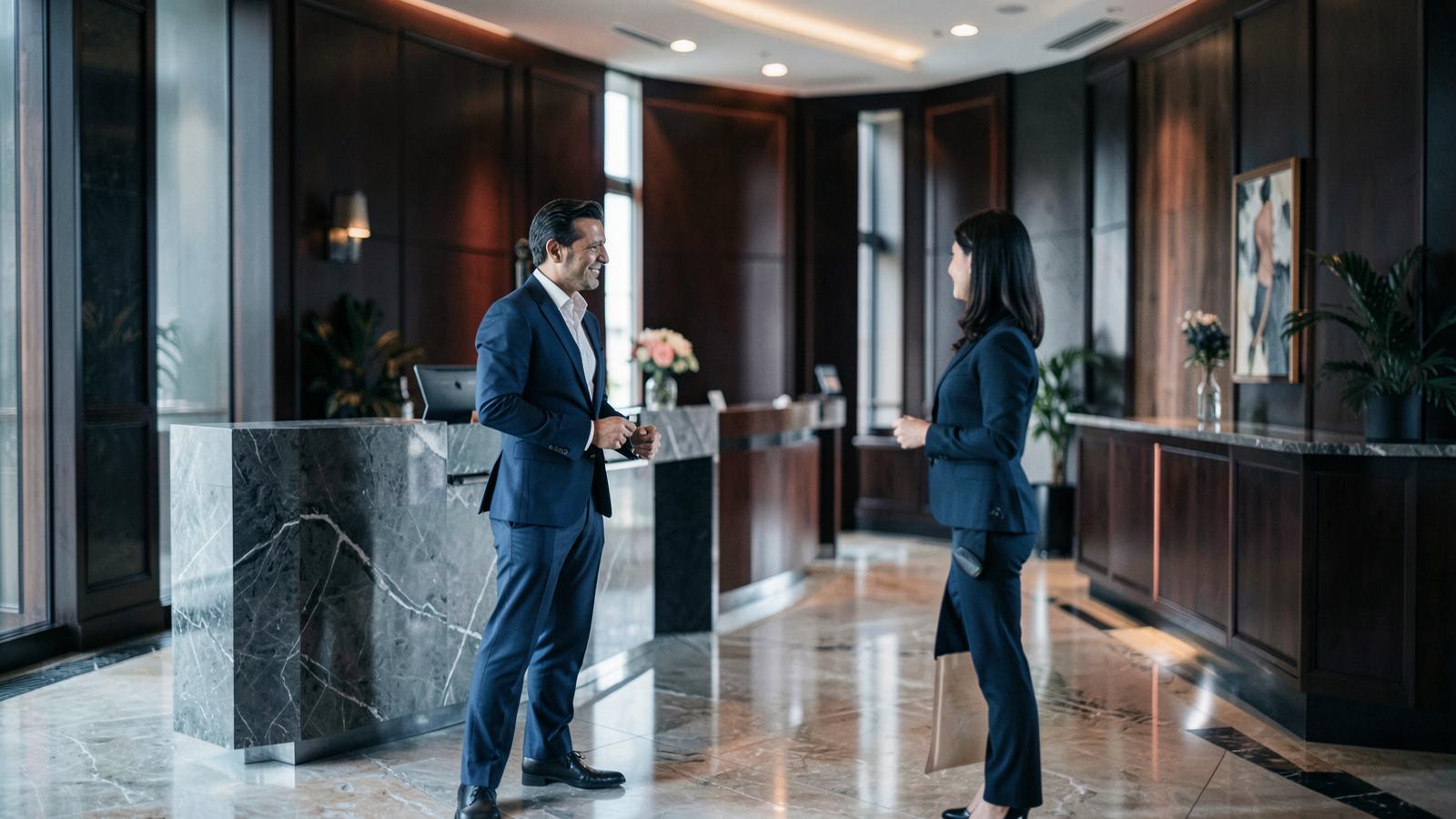
In a business built on lasting relationships, giving regular customers a warm welcome seems natural. The management question is more specific: how can that recognition be preserved without allowing familiarity to determine access to service?
What the literature establishes
Robert B. Zajonc (1968, Journal of Personality and Social Psychology) showed that repeated exposure to a stimulus can be enough to make its evaluation more favourable, without any additional positive information. This is the mere exposure effect: what becomes familiar can become more appealing. The finding offers a hypothesis for customer reception, but does not demonstrate that employees necessarily favour their regular customers.
An effect that depends on the conditions of exposure
Robert F. Bornstein (1989, Psychological Bulletin) synthesised experimental research on mere exposure and confirmed that the magnitude of the effect varies with presentation conditions and stimulus characteristics. Repetition therefore does not operate as a universal rule independent of context. In customer reception, distinguishing useful knowledge of a customer from a preference associated with familiarity is a management question, not a finding directly established by this review.

The premature conclusion
One might conclude that everyone should be welcomed in exactly the same way. That would confuse equitable access with uniform relationships: knowing a customer's case or preferences can spare them unnecessary explanations. The boundary worth examining lies elsewhere, when personal recognition changes the order of service without an explicit operational reason. (our executive and employee training programmes)
What these data cannot establish
These studies concern exposure and affective evaluation, not the order of service in Ticino's banks or shops. They cannot quantify an advantage given to regulars or automatically attribute its cause to familiarity. An appointment, an urgent need or a contractual priority service may explain an observed difference; a satisfaction survey alone cannot settle the question.
A practical check in Lugano
As part of SHR's « Accueil client » programme, a bank, fashion boutique, trading company or Italian-speaking family SME in Lugano could examine the order of service over two weeks. During time slots defined in advance, record without customer identifiers each instance of someone being served ahead of an earlier arrival, its operational reason and whether the customer was personally recognised. The measure to compare between these two categories is the proportion of service encounters involving such queue-jumping without a documented reason, separating appointments from walk-ins. A difference would not prove familiarity bias, but would provide a verifiable basis for reviewing priority rules and practising them in training. To go further: explore the Client Reception training in Lugano, or browse our executive and employee training programmes in Switzerland.
In pictures: Client Reception in Lugano
- client reception
- Lugano
- research
- training lugano