
What we actually learn about complex Management in Lausanne: a 2026 practical guide for executives and managers
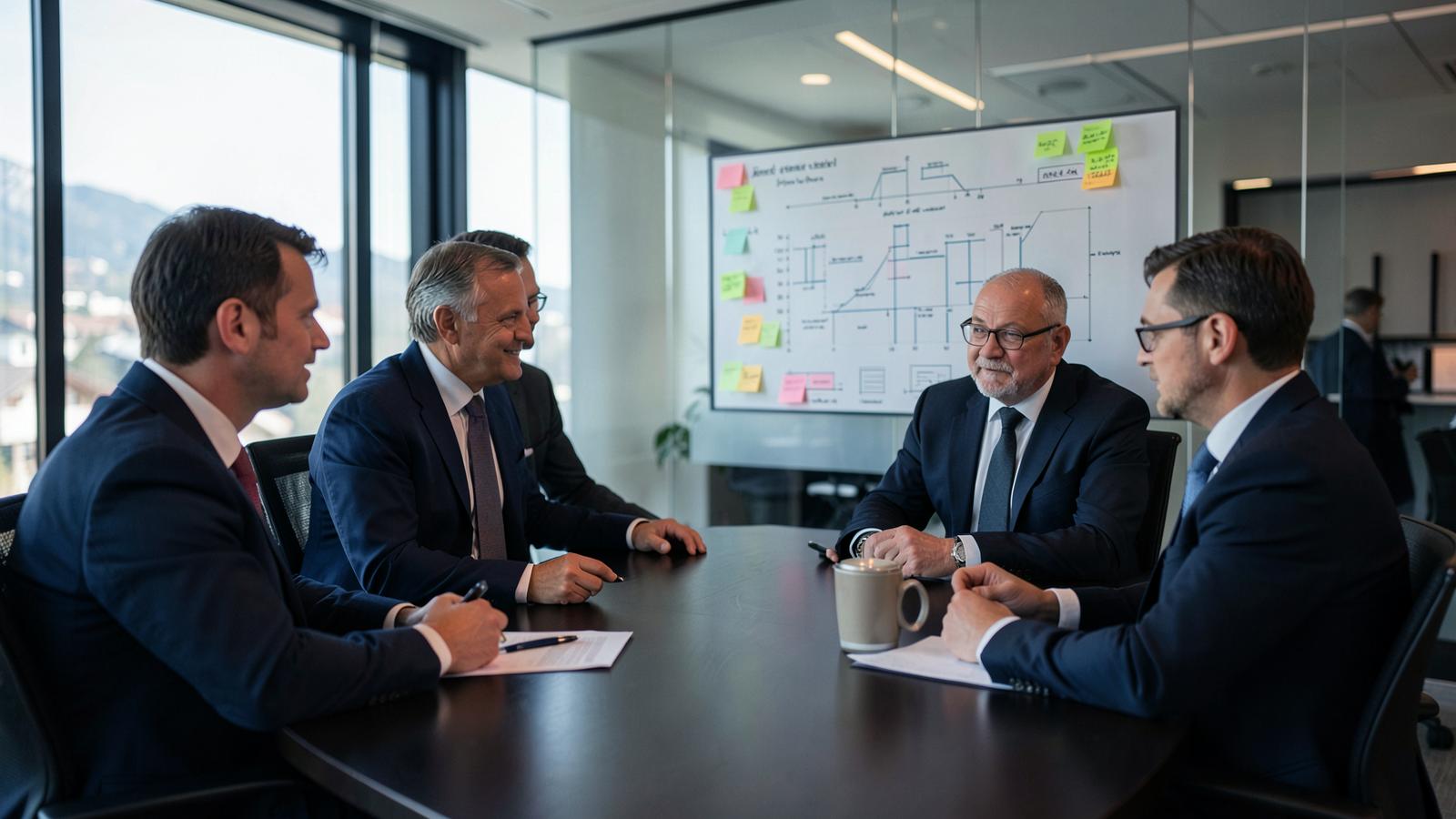
Three conversations in one week in Lausanne on the same subject. That's no longer noise, it's a signal. Here's what we take from it. In Lausanne (Vaud), demand for complex management is rising fast. This practical guide condenses what we observe inside executive committees, frontline management teams and sales organisations. The goal: tangible footholds you can apply on Monday morning, with no jargon and no hollow theory.
The Lausanne context: what no one tells you
In Lausanne, organisations live with three tensions at once: a tight labour market, an implicit bilingual requirement, and a quiet but uncompromising results culture. Any complex management initiative has to navigate these three variables or it will land as out-of-touch. Three weeks. That's the window beyond which a new behaviour fades unless it is explicitly re-anchored.
The 3 most common mistakes
Mistake one: importing an Anglo-Saxon method without adapting it. Mistake two: confusing training with coaching. Mistake three: launching from the top of the pyramid without preparing the managerial layer. All three lead to the same outcome — strong initial enthusiasm, silent regression to old reflexes within six weeks.

The method in 4 stages
(1) Short but honest diagnostic — 5 interviews suffice. (2) Target one key behaviour, not a vague competency. (3) Guided practice over 6 to 8 weeks. (4) Anchoring review at 3 months. The rigour of the sequence — not its intensity — produces the result.
The role of the executive sponsor
With no visible sponsor, the initiative erodes. The sponsor doesn't need to facilitate; they must publicly name the stake, free up participants' time and embody the expected behaviour. That's how training becomes an organisational signal. (our executive and employee training programmes)
Measuring what truly matters
Forget satisfaction surveys. What counts: the observed frequency of the target behaviour 90 days later, the quality of peer feedback, and the trajectory of linked business indicators (NPS, churn, time-to-decision). Three metrics, not thirty.
What stays with us
To close — and I say this carefully — most transformations we see succeed are not spectacular. They are stubborn. That is probably the main lesson of this decade in the field. To go further: explore the Complex Management training in Lausanne, or browse our executive and employee training programmes in Switzerland.
In pictures: Complex Management in Lausanne



- complex management
- Lausanne
- practical guide
- training lausanne