
Client reception: is it safe to flag what is not working?

A contradictory instruction or an unsuitable access arrangement can remain invisible to managers even when reception staff encounter it regularly. The management question is specific: how can employees flag a recurring difficulty without seeing that contribution as a personal risk?
What the literature establishes
Amy Edmondson (1999, Administrative Science Quarterly) identifies an association between team psychological safety and learning behaviour. Psychological safety refers to a shared belief that the team is safe for interpersonal risk-taking, including asking a question or acknowledging a mistake. For reception teams, this suggests an organisational issue: knowing about a difficulty does not necessarily make it open to discussion.
Managerial openness is more than an invitation
James R. Detert and Ethan R. Burris (2007, Academy of Management Journal) examine relationships between leadership behaviour and employee voice aimed at improving organisational functioning. Their findings associate managerial openness with this expression, with perceived psychological safety playing a mediating role. Saying “my door is open” is therefore not, by itself, a credible mechanism: the response to reported difficulties deserves as much attention as the invitation to speak.

The premature conclusion
It would be tempting to conclude that encouraging everyone to speak up is enough to improve client reception. These studies do not, however, establish that more reports automatically lead to a better client experience. Allowing an instruction to be questioned means neither authorising staff to bypass it nor promising that every suggestion will be adopted. (our executive and employee training programmes)
What the data and dashboards cannot tell us
These field studies are not randomised trials of reception training in the Geneva sectors concerned. They do not allow us to quantify the effect of a reporting mechanism on service quality in these settings. In practice, a low number of reports remains ambiguous: it may reflect few difficulties, but it may also mean that speaking up is considered pointless or risky.
A practical check in Genève
As part of SHR’s “Accueil client” programme, a practical exercise in Geneva could involve testing a register of recurring difficulties for two weeks: access instructions in private banking, accreditation in international organisations, appointments in luxury watchmaking or visitor reception in commodity trading. Each entry would describe the problem without client names, sensitive commercial information or exploitable security details, in accordance with internal confidentiality rules. At a deadline agreed before the test, the manager would measure the proportion of reports that had received a documented response — a change, further review or a reasoned decision to retain the rule — while separately recording changes actually implemented. This measure would check how reports are handled, not client satisfaction or the team’s level of psychological safety. To go further: explore the Client Reception training in Geneva, or browse our executive and employee training programmes in Switzerland.
In pictures: Client Reception in Geneva

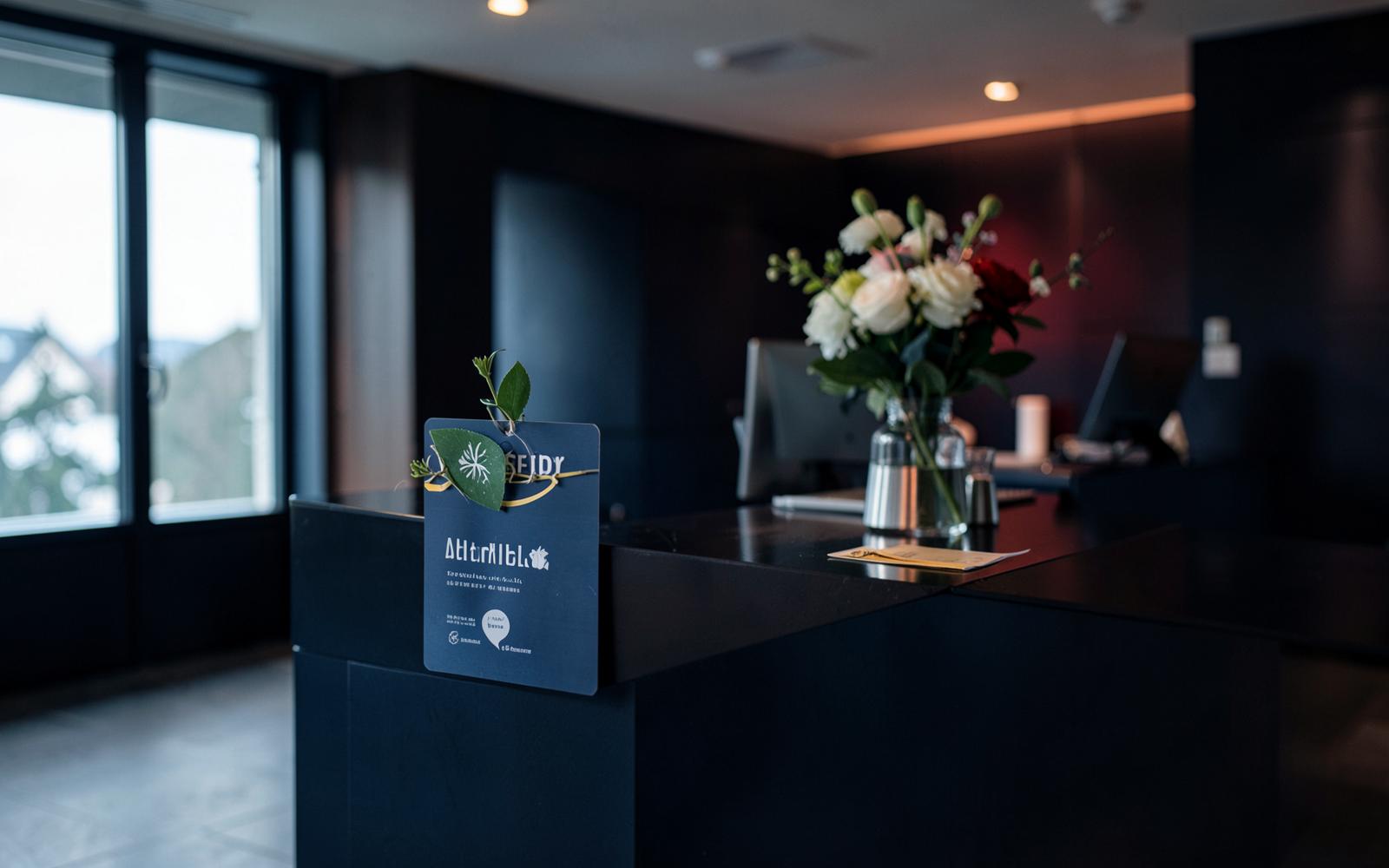

- client reception
- Geneva
- research
- training geneva